
Shopify vs Wix 2026: Which eCommerce Platform is Best for You?
Choosing between Shopify and Wix is one of the most consequential decisions an online merchant will make in 2026. Get it right, and your store is built on a foundation engineered for growth. Get it wrong, and you face costly migrations, lost SEO equity, and stunted revenue potential. This guide was written after in-depth analysis of both platforms - their pricing structures, feature sets, scalability limits, and real-world merchant experiences - to give you the clearest, most actionable comparison available.
Whether you are launching your first product or scaling a seven-figure catalog, the Shopify vs Wix debate comes down to one core question: are you building a business around selling, or selling as part of a broader online presence? The answer determines everything.
1777435580062.png&w=1200&q=75)
Shopify vs Wix at a Glance: The TL;DR
Factor | Shopify | Wix |
|---|---|---|
Primary Purpose | Dedicated eCommerce platform | Website builder with eCommerce capability |
Ease of Use | Structured, commerce-first setup | Drag-and-drop, design-first interface |
Starting Price (monthly, annual) | $29/month (Basic) | $29/month (Core) |
Transaction Fees | 0.5%–2% (unless using Shopify Payments) | None |
App / Plugin Ecosystem | 20,000+ apps | 800+ apps |
Scalability | Enterprise-ready (Shopify Plus) | Suited for small to mid-size stores |
SEO Tools | Strong, with structured data support | Good, improving with each update |
Multi-Channel Selling | Native (Amazon, TikTok, Instagram, POS) | Limited |
Best For | Merchants focused on scaling revenue | Creators, freelancers, small shops |
Shopify vs Wix: Understanding What You Are Really Choosing
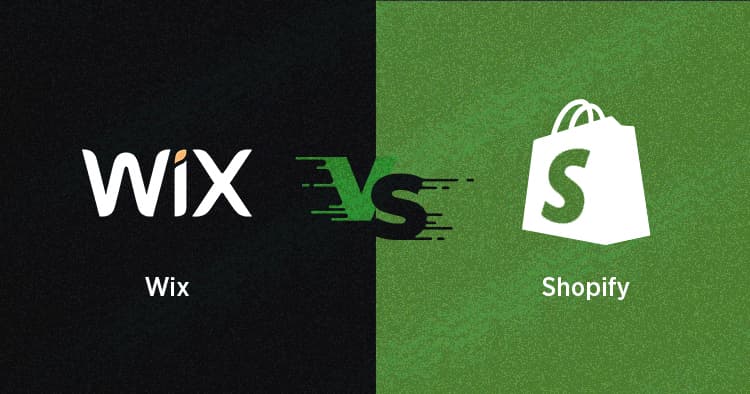
There is no universally "perfect" eCommerce platform. There is only the platform that is perfect for your business model, product catalog, and growth ambitions. Shopify and Wix are not interchangeable tools - they were built for fundamentally different users, and that distinction shapes every feature, pricing decision, and limitation each platform carries.
Shopify was founded in 2006 by Tobias Lütke in Ottawa, Canada, after he struggled to find adequate eCommerce software for his own snowboard shop. It was built, from day one, exclusively around the challenge of selling products online. Today, Shopify powers over 2.8 million businesses across 175+ countries and processes hundreds of billions of dollars in merchant sales annually.
Wix was also founded in 2006, in Tel Aviv, Israel. Its original mission was radically different: make it possible for anyone to create a beautiful website without writing a single line of code. Its drag-and-drop editor became one of the most accessible website builders in the world, with over 8 million live sites. eCommerce was added as a feature layer on top of that foundation - not as the core product.
Why does this origin story matter? Because a platform's DNA shapes its roadmap, its default behavior, and its ceiling. Merchants who need sophisticated inventory management, multi-channel selling, and enterprise-level checkout optimization are working with the grain of Shopify. Merchants who need an elegant portfolio, a service booking system, or a small boutique shop will find Wix a faster, more design-flexible path to launch.
Choosing the wrong platform in 2026 is not just an inconvenience. It has direct consequences on your SEO domain authority accumulation, your site's technical architecture, your checkout conversion rate, and your ability to expand your product catalog without hitting infrastructure walls. These compounding costs make the decision worth analyzing carefully before committing.
Ease of Use: Which Platform Actually Saves You Time?
Shopify's Structured Onboarding
Shopify uses a guided, structured setup flow. When a merchant creates a new store, the dashboard walks through adding products, configuring payment methods, setting up shipping zones, and customizing the storefront theme - in that order. The interface prioritizes commerce tasks: inventory, orders, customers, analytics, and marketing all have dedicated top-level navigation.
This structure has a dual effect. It is fast for merchants who already know they are selling physical or digital products, because every workflow is purpose-built. It feels rigid, however, for users who want to start with visual design before thinking about backend logistics. Shopify's theme editor is powerful but operates within defined section-based templates - you customize within guardrails, not on a blank canvas.
Wix's Drag-and-Drop Freedom
Wix gives users a blank canvas. Its drag-and-drop editor allows any element - text block, image, button, product grid — to be placed anywhere on the page with pixel-level precision. This makes Wix exceptionally approachable for non-technical users who think visually. Wix ADI (Artificial Design Intelligence) can even auto-generate a full website layout from a short questionnaire, giving absolute beginners a starting point in minutes.
The trade-off: that same freeform flexibility makes it easier to accidentally create poorly structured pages from an SEO and mobile responsiveness standpoint. What looks beautiful on a desktop may require extra attention to ensure it renders correctly across all devices. Managing eCommerce operations — product variants, discount codes, abandoned cart recovery — also requires navigating more menu layers compared to Shopify's commerce-first dashboard.
Verdict on Ease of Use
For merchants whose primary activity is selling, Shopify's structured workflow reduces friction. For creators, consultants, or micro-retailers who need a website first and a shop second, Wix's freeform editor delivers a faster, more intuitive design experience.
Features and Flexibility: What Can Each Platform Actually Do?
Shopify's Commerce Feature Set
- Product management: Unlimited products on all paid plans, with up to 100 variants per product (size, color, material combinations).
- Payment processing: Shopify Payments (available in 20+ countries) eliminates third-party transaction fees. Supports 100+ external payment gateways.
- Multi-channel selling: Native integrations to sell on Facebook, Instagram, TikTok, Amazon, Walmart, and in-person via Shopify POS.
- Abandoned cart recovery: Included from the Basic plan.
- Shopify Markets: Built-in international selling with localized currencies, languages, and tax/duty handling.
- Checkout customization: Advanced checkout scripting available on Shopify Plus for enterprise merchants.
Wix's Feature Set
- Product management: Supports physical, digital, and service products. Product options and variants are available but have a lower variant limit than Shopify.
- Payment processing: Wix Payments is available in select countries; also integrates with PayPal, Stripe, and Square. No additional transaction fees beyond payment processor rates.
- Wix Bookings: Built-in scheduling system - a major advantage for service-based businesses, fitness studios, and consultants.
- Wix Blog: A full-featured blogging engine built natively into the platform - useful for content-led SEO strategies.
- Multilingual support: Available via Wix Multilingual, though not as deeply integrated as Shopify Markets for currency switching and international checkout.
- Abandoned cart recovery: Available on Business and higher plans.
Shopify's feature set is broader and deeper for pure retail operations. Wix's feature set is more versatile for mixed-use websites - businesses that sell products alongside services, content, or events.
The App Ecosystem: Extending Your Platform's Power
No platform does everything out of the box. The strength of a marketplace's app ecosystem directly determines how far you can push your store's capabilities without custom development.
Shopify App Store: 20,000+ Solutions
The Shopify App Store is one of the most extensive third-party ecosystems in eCommerce. As of 2026, it hosts over 20,000 apps covering every conceivable use case: email marketing, upselling, loyalty programs, dropshipping, reviews, subscriptions, and advanced analytics. Notable top-performing apps include:
- Klaviyo — Email and SMS marketing automation, deeply integrated with Shopify's customer and order data.
- Judge.me — Product review collection and display with rich snippet support for SEO.
- DSers — AliExpress dropshipping management, the successor to Oberlo.
- Loox — Visual review platform enabling photo and video customer reviews.
- ReConvert — Post-purchase upsell and thank-you page optimization.
- Printful — Print-on-demand fulfillment and product creation.
- PageFly — Advanced drag-and-drop landing page and product page builder.
The sheer volume of the Shopify App Store means there is almost always a vetted, reviewed solution for any problem a merchant encounters. Competition among developers also keeps pricing competitive and quality high.
Wix App Market: 800+ Focused Options
Wix's App Market is substantially smaller, with approximately 800+ apps. What it lacks in volume, it partially compensates for with native Wix-built tools that other platforms would require third-party apps to replicate - including Wix Stores, Wix Bookings, Wix Automations, and Wix Blog. Popular third-party apps available in the Wix ecosystem include:
- Chaty — Live chat and AI chatbot customer support widget.
- Printful — Print-on-demand, available across both platforms.
- Fera Reviews — Customer review, social proof management.
- Blockify — Analyze visitors, Fraud Filter & Block IP, Bots
- Consentik — GDPR/CCPA cookie banner & Google Consent Mode V2 integration.
For merchants whose needs align with Wix's native feature set and the available app catalog, the smaller ecosystem is not a dealbreaker. For merchants who need specialized commerce tools - subscription billing engines, advanced B2B features, headless commerce integrations - the gap compared to Shopify's App Store becomes more significant.
Pricing Comparison: What You Actually Pay in 2026
Shopify Pricing Plans
Plan | Monthly (billed annually) | Transaction Fee (external payment) |
|---|---|---|
Basic | $29/month | 2% |
Shopify | $79/month | 1% |
Advanced | $299/month | 0.5% |
Shopify Plus | From $2,300/month | Custom |
Shopify's most important pricing nuance is the transaction fee. If a merchant does not use Shopify Payments as their payment processor - because Shopify Payments is unavailable in their country, or they prefer a different gateway - Shopify charges an additional fee on every sale: 2% on Basic, 1% on Shopify, and 0.5% on Advanced. At scale, these fees compound significantly.
Wix Pricing Plans (eCommerce-Capable)
Plan | Monthly (billed annually) | Transaction Fees |
|---|---|---|
Core | $29/month | None |
Business | $39/month | None |
Business Elite | $159/month | None |
Note: Wix also offers a Light plan at $17/month, but it does not include eCommerce functionality. The Core plan is the minimum tier required to sell online.
Most annual plans include a free domain for the first year. After that, renewal typically costs between $14.95 and $24.95 annually, depending on the extension (e.g., .com, .org).
Wix charges no additional transaction fees beyond standard payment processor rates. This is a meaningful advantage for merchants who operate in countries where Shopify Payments is unavailable or who prefer working with specific payment gateways. However, the total cost of ownership on each platform also depends heavily on the apps and add-ons required - and Shopify's larger ecosystem means more paid app options to consider.
Total Cost Perspective
At entry level, both platforms start at $29/month for annual billing. The real cost divergence appears at scale: a Shopify merchant processing $50,000/month in sales through a non-Shopify-Payments gateway on the Basic plan would pay an extra $1,000/month in transaction fees alone. Shopify's mid-tier plan eliminates half that fee. Wix merchants pay none. Conversely, Shopify's Advanced plan provides reporting depth, automation capabilities, and shipping discounts that reduce operational costs at higher volumes in ways Wix's Business Elite plan does not fully replicate.
Scalability: Which Platform Grows With Your Business?
Shopify's Scalability Architecture
Shopify was architected from the ground up to handle traffic spikes, large product catalogs, and high-volume sales events. Its infrastructure is hosted and managed - merchants never touch a server - and Shopify's SLA guarantees 99.99% uptime. Shopify Plus, the enterprise tier, adds features specifically designed for high-volume merchants: customizable checkout scripting via Shopify Functions, multi-store management through the Organization Admin, dedicated merchant success managers, and priority API rate limits for complex integrations.
Notable brands operating on Shopify Plus include Gymshark, Allbirds, Fashion Nova, and Heinz. The platform's headless commerce capability - using Shopify as a backend with a custom frontend - gives technical teams full flexibility without sacrificing Shopify's order management and fulfillment infrastructure.
Wix's Scalability Reality
Wix is a genuinely capable platform for small to mid-size businesses. A boutique with a few hundred SKUs, a local brand with seasonal inventory, or a creator selling digital products will not hit meaningful limits on Wix. However, Wix does not publish an enterprise-level tier comparable to Shopify Plus. API access, headless commerce capabilities, and custom checkout scripting are limited compared to Shopify's enterprise offering.
Merchants who anticipate rapid catalog growth - thousands of SKUs, international market expansion, high-volume flash sales, complex B2B workflows - will find Shopify's infrastructure more aligned with those demands. Wix's Business Elite plan at $159/month represents a ceiling that many scaling merchants will exceed in requirements before they exceed it in budget.
Verdict: Which Merchant Are You?
Choose Shopify If:
- Selling products online is your primary business activity, not a secondary function of your website.
- You plan to expand across multiple sales channels - social commerce, Amazon, POS, international markets.
- Your catalog will grow to hundreds or thousands of SKUs and require advanced inventory management.
- You need robust abandoned cart recovery, upsell flows, and detailed eCommerce analytics from day one.
- You are in a country where Shopify Payments is available, removing the transaction fee burden.
- You are building toward enterprise scale and want a clear upgrade path without platform migration.
Choose Wix If:
- You need a beautiful website that includes a shop - not a shop that happens to have a website.
- Your business combines product sales with services, bookings, events, or content (blogs, portfolios).
- Design flexibility and visual customization are top priorities and you want pixel-level control.
- You are a solo entrepreneur, freelancer, or small business with a limited product range.
- You operate in a market where Shopify Payments is unavailable and want to avoid transaction fees.
- Budget predictability matters and you want a known monthly cost without variable fees at scale.
Conclusion
The Shopify vs Wix question is ultimately a question of direction. Both platforms launch today. Only one of them compounds the right way for your specific trajectory.
Shopify is the infrastructure choice for merchants who view their store as a revenue engine - one that needs to process transactions efficiently, integrate deeply with third-party tools, scale without friction, and operate across every channel where customers spend time. Its commerce-first DNA means every feature, every update, and every partner integration is oriented around helping merchants sell more.
Wix is the infrastructure choice for entrepreneurs who need a complete online presence - one that serves multiple purposes, reflects strong visual branding, and includes commerce as one of several customer touchpoints. Its design-first DNA means freedom, approachability, and versatility for mixed-use business models.
Neither platform is a compromise. Each is excellent at what it was built to do. The merchant's job is to be honest about what their business actually is - and choose the engine built for that exact mission. In 2026, that alignment between business model and platform DNA is the single most important factor in long-term eCommerce success.
![Best Shopify Pop-ups App in 2026 [+ Comparison Table]](/_next/image?url=https%3A%2F%2Fapi-wix.letsmetrix.com%2Fuploads%2FBestShopifyPopupApps1753692269470.png&w=3840&q=75)
![9 Best Shopify Translation Apps in 2026 [Expert Reviews]](/_next/image?url=https%3A%2F%2Fapi-wix.letsmetrix.com%2Fuploads%2FBestShopifyTranslationApps(1)1772099410877.png&w=3840&q=75)
![7 Best Shopify Inventory Management Apps in 2026 [Expert Reviews]](/_next/image?url=https%3A%2F%2Fapi-wix.letsmetrix.com%2Fuploads%2FShopifyInventoryManagementApps1769568798368.jpg&w=3840&q=75)
![10 Best Shopify Page Builder Apps in 2026 [Real Ratings & Use Cases]](/_next/image?url=https%3A%2F%2Fapi-wix.letsmetrix.com%2Fuploads%2Fshopifypagebuilderapps(1)1766045668400.png&w=3840&q=75)

1781062586886.png&w=3840&q=75)
1781252894352.png&w=3840&q=75)
1779178565213.png&w=3840&q=75)
1779079852354.png&w=3840&q=75)
1778146500970.png&w=3840&q=75)
1778052641749.png&w=3840&q=75)
1778220787051.png&w=3840&q=75)
1777884794983.png&w=3840&q=75)
1777446574562.png&w=3840&q=75)
1777436136439.png&w=3840&q=75)
1777368900479.png&w=3840&q=75)
(1)1776226010776.png&w=3840&q=75)
![Top 7 Klaviyo Alternatives and Competitors in 2026 [with Real Ratings]](/_next/image?url=https%3A%2F%2Fapi-wix.letsmetrix.com%2Fuploads%2FKlaviyoAlternatives(1)1775801269772.png&w=3840&q=75)