
Shopify vs Shopline 2026: Complete Platform Comparison
Shopify wins for global DTC brands, dropshippers, and SEO-driven stores due to its 20,000+ app ecosystem, Shopify Payments in 36+ countries, and dominant North American/European infrastructure. Shopline wins for Asia-Pacific merchants, social commerce sellers, and live streaming retailers due to native Facebook/Instagram/LINE/WeChat integration, built-in live commerce, and integrated CRM/loyalty tools without third-party apps. Shopify powers 2.8M+ stores globally; Shopline serves 600K+ merchants with stronger APAC localization.
Choosing between Shopify and Shopline is one of the highest-leverage decisions a merchant makes in 2026. Get it right, and your store inherits a technical infrastructure that supports organic growth, international expansion, and healthy profit margins for years. Get it wrong, and you face costly migrations, lost SEO equity, and platform limitations that quietly cap your revenue ceiling.
This guide is built on a direct analysis of both platforms' publicly available feature sets, pricing structures, merchant community feedback, and documented performance benchmarks. The comparison below is designed for online merchants at every stage - from first-time store builders to established brands considering a platform switch.
Shopify, founded in 2006 and headquartered in Canada, currently powers over 2.8 million merchants across 175+ countries. SHOPLINE, founded in Hong Kong in 2013 and now headquartered in Singapore, operates across 10+ markets including the United States, United Kingdom, Australia, Taiwan, Malaysia, Vietnam, Indonesia, and mainland China. These two platforms share the same goal - helping merchants sell online - but serve fundamentally different merchant profiles.
The table below cuts through the noise and gives a direct platform-to-platform snapshot.
Category | Shopify | Shopline |
|---|---|---|
Founded | 2006, Canada | 2013, Singapore |
Merchant Base | 2.8M+ merchants, 175+ countries | 600,000+ merchants; expanding globally |
Best For | Global-first DTC brands, dropshippers, scalable retail | Asia-Pacific merchants, social commerce, omnichannel |
Ease of Use | Beginner-friendly, intuitive admin | Moderate learning curve, richer default features |
App Ecosystem | 20,000+ apps in Shopify App Store | Smaller but growing app marketplace |
Starting Price | $39/month (Basic, billed monthly) | Free plan available; paid plans vary by region |
Transaction Fees | 0.6%–2% (waived with Shopify Payments) | Varies by plan and payment gateway |
Social Commerce | Supported via integrations | Native - Facebook, Instagram, LINE, WeChat |
Live Commerce | Native creator integrations (Shopify Collabs) + TikTok Shop, with third-party apps for full live streaming | Built-in live streaming commerce with native social channel integration |
SEO Capabilities | Strong - editable meta tags, sitemaps, canonical URLs | Standard SEO tools; improving |
Scalability | Enterprise-ready via Shopify Plus | Scales well for APAC; growing globally |
Payment Gateways | 100+ gateways, Shopify Payments in 36+ countries | Local and regional gateways, strong APAC coverage |
Multi-language | Yes - via Shopify Markets and third-party apps | Yes - native multi-language support |
1778136965891.png&w=1200&q=75)
Shopify vs. Shopline at a Glance: The Platform Divide That Defines Your Business
There is no universally perfect ecommerce platform. There is only the platform that fits your business model, your target market, your growth trajectory, and your team's operational capacity. The decision between Shopify and Shopline is not about which platform is objectively better - it is about which platform is structurally aligned with the business you are building right now and the one you intend to scale into over the next three to five years.
Defining Each Platform
Shopify is a cloud-based, all-in-one commerce platform built to help merchants of all sizes create online stores, manage products, process payments, and sell across multiple channels. Its architecture is deliberately simplified on the surface while remaining deeply extensible through its API and app ecosystem. Shopify has evolved from a storefront builder into a full commerce operating system, with solutions spanning point-of-sale hardware, fulfillment logistics, B2B wholesale, and enterprise-grade operations via Shopify Plus.
Shopline is an omnichannel commerce platform built with the Asia-Pacific merchant in mind. It consolidates online storefront management, social commerce, live streaming sales, physical retail operations, and CRM into a single platform. Where Shopify's strength lies in its breadth of integrations, Shopline's competitive advantage is native features - particularly for merchants selling through messaging apps like LINE and WeChat or through live commerce streams on Facebook and Instagram.
Why the Platform Decision Has Long-Term Consequences
Your platform choice creates a technical foundation that affects three critical business pillars simultaneously.
First, SEO performance: the platform's URL structure, page load speed, sitemap generation, and canonical URL handling directly influence how search engines index and rank your store. Migrating platforms mid-growth resets domain authority signals and risks temporary ranking drops.
Second, scalability: a platform that handles 100 orders per month may impose architectural bottlenecks at 10,000.
Third, profit margins: transaction fees, app subscription costs, and payment gateway charges compound as volume scales. A 1% difference in transaction fees at $1 million in annual revenue equals $10,000 per year in additional platform cost.
Is Shopify Easier to Use Than Shopline?
Shopify's Onboarding Experience
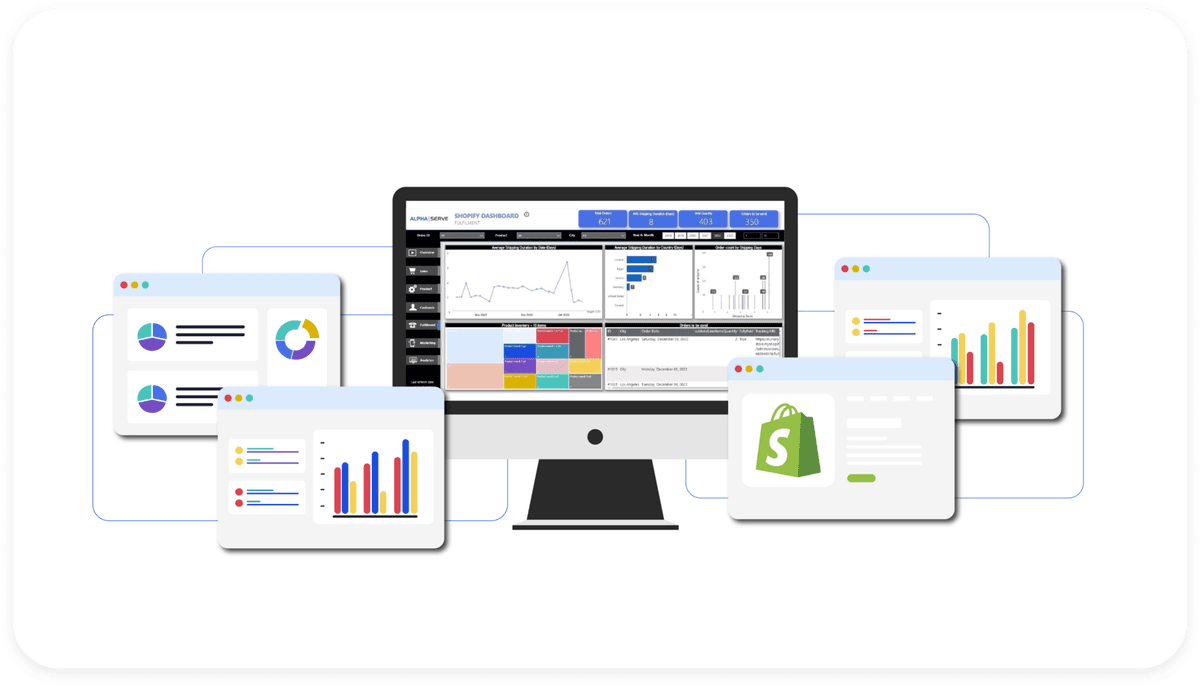
Shopify is widely regarded as one of the most beginner-accessible ecommerce platforms on the market. The admin dashboard presents a clean, logically organized interface that guides new merchants through store setup - adding products, configuring shipping rates, connecting payment gateways, and publishing a live storefront - within hours rather than days. Shopify's theme editor, built on the Online Store 2.0 architecture, uses a drag-and-drop section system that requires no coding knowledge to produce a professional-grade storefront. Templates are mobile-responsive by default.
For merchants with technical backgrounds, Shopify provides access to Liquid (its templating language), the Admin API, and Storefront API for custom development. This creates a dual-track accessibility - non-technical founders can operate independently, while developers can build deeply customized experiences when required.
Shopline's Onboarding Experience
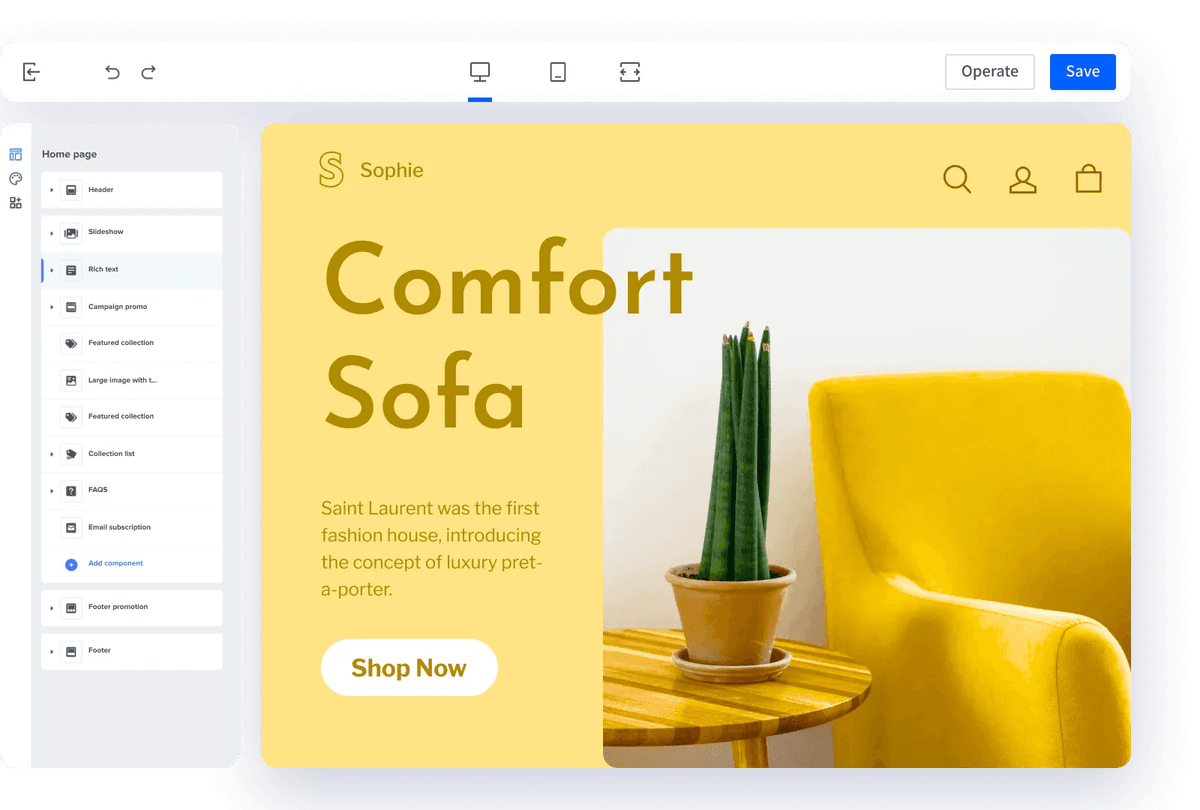
Shopline's interface is feature-dense relative to Shopify's stripped-back admin. Merchants gain access to social commerce configuration, CRM tools, loyalty programs, and live commerce management from the outset, which means the dashboard carries more options to navigate. For merchants coming from a brick-and-mortar background or those already embedded in Asia-Pacific social channels, this feature density reduces the need for third-party app hunting - the tools are already in place.
The trade-off is that new merchants unfamiliar with omnichannel operations may experience a steeper initial learning curve. Shopline provides onboarding documentation and regional customer support, which is particularly strong for merchants operating in Hong Kong, Taiwan, and Southeast Asia where local-language support is available.
Verdict on Ease of Use
Shopify wins for pure setup simplicity and has the edge for merchants launching their first store with no prior ecommerce experience. Shopline is more efficient for merchants who already operate across social channels and physical retail, as its integrated toolset reduces the configuration overhead that Shopify merchants would otherwise address through multiple app installations.
Features and Flexibility: Where Each Platform Draws the Line
Shopify Core Features
- Online store builder with drag-and-drop section editor and 100+ free and paid themes
- Shopify POS for unified online and in-person selling
- Multi-channel selling across Amazon, eBay, Google Shopping, Facebook, Instagram, and TikTok Shop
- Shopify Markets for international storefronts with localized currency, language, and pricing
- Abandoned cart recovery via automated email sequences
- Shopify Flow — a no-code automation builder available on higher-tier plans
- Shopify Shipping with discounted rates from major carriers
- Advanced analytics and reporting on higher-tier plans
- Shopify Payments — the native payment gateway, available in 36+ countries, eliminating transaction fees on those plans
- B2B wholesale features available on Shopify Plus
Shopline Core Features
- Omnichannel dashboard consolidating online store, social channels, and physical retail
- Native live commerce — built-in live streaming sales with real-time inventory sync
- Social commerce integrations — native connections to Facebook Shop, Instagram Shopping, LINE Official Account, and WeChat
- Built-in loyalty and membership programs — points, tiers, and member pricing without third-party apps
- CRM with customer segmentation for targeted marketing campaigns
- Marketing automation — abandoned cart, win-back flows, and promotional campaigns
- Inventory management across multiple locations and warehouses
- Multi-language storefronts with native support
- O2O (online-to-offline) features for retailers bridging digital and physical operations
- Regional payment gateway coverage tailored to APAC markets
Where Shopify Leads
Shopify's flexibility advantage lies in its API depth and the sheer volume of third-party integrations available. No matter how niche the operational requirement - subscription billing, digital product delivery, affiliate management, headless commerce - the Shopify ecosystem almost certainly has a vetted solution. Shopify's SEO infrastructure is also more mature, with auto-generated XML sitemaps, editable title tags, meta descriptions, and canonical URLs baked into the platform architecture.
Where Shopline Leads
Shopline's feature advantage is concentrated in social and live commerce. For merchants whose primary sales channels are Facebook Live, Instagram Stories, or LINE broadcast messages, Shopline's native toolset eliminates the configuration friction that Shopify merchants face when stitching together third-party apps to replicate equivalent functionality. Shopline's built-in loyalty system and CRM also give it a native advantage for relationship-driven retail models common across Asia-Pacific markets.
The App Ecosystem: The Marketplace Behind the Marketplace
One of the most consequential - and frequently underestimated - aspects of platform selection is the quality and depth of the surrounding app ecosystem. An app store does not just add features; it determines how quickly a merchant can respond to operational challenges, market trends, and growth inflection points without requiring custom development.
Shopify App Store
With over 20,000 apps across categories including marketing, logistics, customer service, analytics, and merchandising, the Shopify App Store is the largest purpose-built ecommerce app marketplace in the world. Every app listed undergoes a review process, and ratings and reviews are publicly visible. The breadth of options means that for virtually any use case, merchants can find multiple competing solutions and choose based on price, feature set, and merchant reviews.
Notable apps that Shopify merchants rely on include:
- Yotpo — reviews, loyalty programs, and visual marketing
- Pop Convert — pop-ups, banners, and smart bars
- Loox — photo and video review collection
- Omnisend — email, SMS, and push notification automation
- Tidio — live chat and AI chatbot for customer engagement
- Printful — print-on-demand fulfillment and product creation
- Consentik — Cookie banner for GDPR/CCPA
- Blockify — IP blocker, bot blocker and country blocker
The depth of the Shopify App Store creates a significant advantage for merchants with specialized requirements. The downside is cost accumulation - the average Shopify merchant runs multiple paid app subscriptions simultaneously, and the combined cost can meaningfully affect margin, particularly for merchants on lower-tier plans.
Shopline's App Marketplace
Shopline operates its own app marketplace, which is smaller in absolute numbers than Shopify's but curated for the operational realities of APAC merchants. The platform's native feature set reduces the dependency on third-party apps for common functions - loyalty programs, live commerce, and CRM tools are built in rather than bolted on.
Shopline's ecosystem includes integrations for:
- Google Shopping — product feed synchronization for paid and organic listings
- Facebook and Instagram — catalog sync and dynamic ad integration
- LINE — messaging-based marketing and order notifications
- WhatsApp Business — customer communication and order updates
- ERP systems — inventory and order management for larger operations
- Regional logistics providers — carrier integrations specific to Hong Kong, Taiwan, Singapore, Malaysia, and other APAC markets
For merchants outside the APAC region, the narrower app selection may require creative workarounds or acceptance of feature gaps relative to the Shopify ecosystem.
Shopify vs. Shopline Pricing: Which Is Cheaper in 2026?
Shopify Pricing
Shopify's pricing structure is transparent and tiered by feature access and transaction fee rates. All prices below reflect monthly billing; annual billing reduces costs by approximately 25%.
Plan | Monthly Price | Transaction Fee (non-Shopify Payments) | Key Features |
|---|---|---|---|
Basic | $39/month | 2% | 1 staff accounts, basic reports, shipping discounts |
Grow | $105/month | 1% | 5 staff accounts, professional reports, lower transaction fees |
Advanced | $399/month | 0.6% | 15 staff accounts, advanced reports, third-party calculated shipping |
Plus | From $2,300/month on a 3-year term | 0.15% (via Shopify Payments) | Enterprise automation, custom checkout, dedicated support |
The key variable in Shopify's true cost is the transaction fee. Merchants using Shopify Payments (available in 36+ countries) pay no additional transaction fee on top of the standard credit card processing rate. Merchants using third-party payment gateways pay the plan's listed transaction fee on every sale, which compounds significantly at scale.
Shopline Pricing
Shopline's pricing structure varies by market and region, which reflects its multi-market operational model. A free plan is available with core storefront functionality, making it accessible for merchants testing the platform before committing to a paid subscription. Paid plans unlock advanced features including live commerce, loyalty programs, expanded CRM capabilities, and higher product limits. Enterprise and custom pricing is available for high-volume operations.
Merchants considering Shopline are advised to consult the pricing page specific to their target market region, as feature inclusions and price points differ between Shopline's Hong Kong, Taiwan, Southeast Asia, and global market offerings. This regional pricing differentiation can represent a meaningful cost advantage for APAC-based merchants compared to Shopify's USD-denominated global pricing.
Hidden Costs to Factor In
On Shopify, the most common cost escalators are app subscriptions, premium themes, and transaction fees on third-party gateways. A fully operational Shopify store with email marketing, review management, and a loyalty program can realistically carry $100–$400/month in app costs above the plan subscription fee.
On Shopline, merchants with requirements outside the native feature set may face integration consulting costs or limitations that require workarounds. Merchants targeting markets outside APAC should evaluate whether Shopline's ecosystem sufficiently covers their marketing and logistics stack before committing.
Scalability: Building for Tomorrow, Not Just Today
How Shopify Scales
Shopify's infrastructure is built on a globally distributed cloud architecture, designed to handle traffic surges without merchant-side intervention. During peak events - Black Friday, product launches, flash sales - Shopify's platform absorbs load at the infrastructure level. Shopify reported processing over $14.6 billion in sales during Black Friday Cyber Monday 2025, a demonstration of the platform's capacity at global scale.
For brands that outgrow standard plans, Shopify Plus provides enterprise-grade infrastructure including custom checkout scripting, dedicated launch engineers, Shopify Flow automation, Shopify Launchpad for scheduled campaigns, B2B wholesale channels, and a 99.99% uptime SLA. Shopify Plus also enables headless commerce deployments, allowing brands to decouple their storefront from the commerce engine and deliver content through custom front-end frameworks. Curently, there are 47,000+ live Shopify Plus merchants in 2026 (up from ~25,000 in 2022 with 88% growth)
Shopify's international scaling tool, Shopify Markets, allows merchants to manage multiple regional storefronts - with localized currencies, languages, tax calculations, and domain structures - from a single Shopify admin. This reduces the operational complexity of global expansion significantly.
How Shopline Scales
Shopline's scalability story is strongest within the APAC corridor. Merchants who begin on Shopline in Hong Kong and expand into Taiwan, Singapore, Malaysia, or mainland China benefit from Shopline's existing regional infrastructure, localized payment gateways, and logistics partnerships that are already calibrated for those markets. The platform's omnichannel architecture scales to support multiple physical locations, warehouses, and sales channels within a single admin environment.
For Shopline merchants targeting Western markets as a primary or secondary audience, scalability requires a more deliberate evaluation of the platform's global feature coverage, third-party marketing tool integrations, and SEO infrastructure relative to Shopify's more battle-tested international capabilities.
SEO Scalability
Shopify's SEO architecture - clean URL structures, auto-generated sitemaps, canonical tag management, and fast page load performance via its CDN - provides a reliable technical SEO foundation that scales as the product catalog grows. Shopify's blog functionality also supports content marketing strategies that compound organic traffic over time.
Shopline supports standard SEO fundamentals including editable meta tags and product page optimization. For merchants in Asian markets where Google is not the dominant search engine - specifically in mainland China where Baidu leads - Shopline's regional SEO tooling may offer more relevant optimizations than Shopify's Google-centric approach.
Should I Choose Shopify or Shopline? Decision Guide
Choose Shopify if you are:
- A global-first DTC brand targeting customers in North America, Europe, or Australia as primary markets
- A content-driven brand investing in SEO, blogging, and long-form marketing to build organic search visibility
- A subscription or recurring revenue business requiring robust subscription billing app integrations
- A merchant who prioritizes app ecosystem depth and wants the flexibility to add specialized tools as the business grows
- An enterprise operator requiring custom checkout, API-first headless architecture, and a global fulfillment network
Choose Shopline if you are:
- A merchant based in or primarily targeting Asia-Pacific markets - Hong Kong, Taiwan, Singapore, Malaysia, mainland China, or Japan
- A brand with an active social commerce strategy that relies on Facebook Live, Instagram Shopping, LINE, or WeChat as primary sales channels
- A retailer operating both online and offline who wants unified omnichannel management without configuring multiple third-party tools
- A merchant who wants built-in loyalty and CRM features without the additional cost of third-party app subscriptions
- A live commerce seller for whom streaming sales events are a core revenue channel
- A business that benefits from regional customer support and documentation in languages including Cantonese, Mandarin, or Bahasa
Conclusion
The Shopify vs. Shopline decision ultimately comes down to geography, sales channel strategy, and the operational features a merchant needs natively versus through third-party apps. Neither platform is the right answer for everyone, and the merchant who spends time honestly mapping their business model to platform strengths will avoid the costly mistake of a premature migration later.
Shopify remains the dominant choice for merchants building globally distributed, SEO-driven, or highly customized ecommerce operations. Its app ecosystem, international infrastructure, and brand recognition create a high-confidence foundation for brands scaling into new markets worldwide.
Shopline delivers a compelling alternative - and in many cases a superior choice - for merchants whose core market is Asia-Pacific, whose sales strategy is rooted in social and live commerce, or who want a feature-rich platform that reduces app dependency without sacrificing operational control.
Before finalizing a platform decision, take advantage of free trials and free plans where available. Test the admin interface with real product data, simulate a customer purchase journey, and evaluate how each platform's default toolset aligns with the workflows your team will use daily. The platform that fits your operations today while scaling cleanly with your ambitions is the right choice - regardless of which brand name is on the login screen.
1781843119189.png&w=3840&q=75)
![Best Shopify Pop-ups App in 2026 [+ Comparison Table]](/_next/image?url=https%3A%2F%2Fapi-wix.letsmetrix.com%2Fuploads%2FBestShopifyPopupApps1753692269470.png&w=3840&q=75)
![9 Best Shopify Translation Apps in 2026 [Expert Reviews]](/_next/image?url=https%3A%2F%2Fapi-wix.letsmetrix.com%2Fuploads%2FBestShopifyTranslationApps(1)1772099410877.png&w=3840&q=75)
![7 Best Shopify Inventory Management Apps in 2026 [Expert Reviews]](/_next/image?url=https%3A%2F%2Fapi-wix.letsmetrix.com%2Fuploads%2FShopifyInventoryManagementApps1769568798368.jpg&w=3840&q=75)
![10 Best Shopify Page Builder Apps in 2026 [Real Ratings & Use Cases]](/_next/image?url=https%3A%2F%2Fapi-wix.letsmetrix.com%2Fuploads%2Fshopifypagebuilderapps(1)1766045668400.png&w=3840&q=75)

1781062586886.png&w=3840&q=75)
1781252894352.png&w=3840&q=75)
1779178565213.png&w=3840&q=75)
1779079852354.png&w=3840&q=75)
1778146500970.png&w=3840&q=75)
1778052641749.png&w=3840&q=75)
1778220787051.png&w=3840&q=75)
1777884794983.png&w=3840&q=75)
1777446574562.png&w=3840&q=75)
1777436136439.png&w=3840&q=75)